
Your cart is empty
Start shopping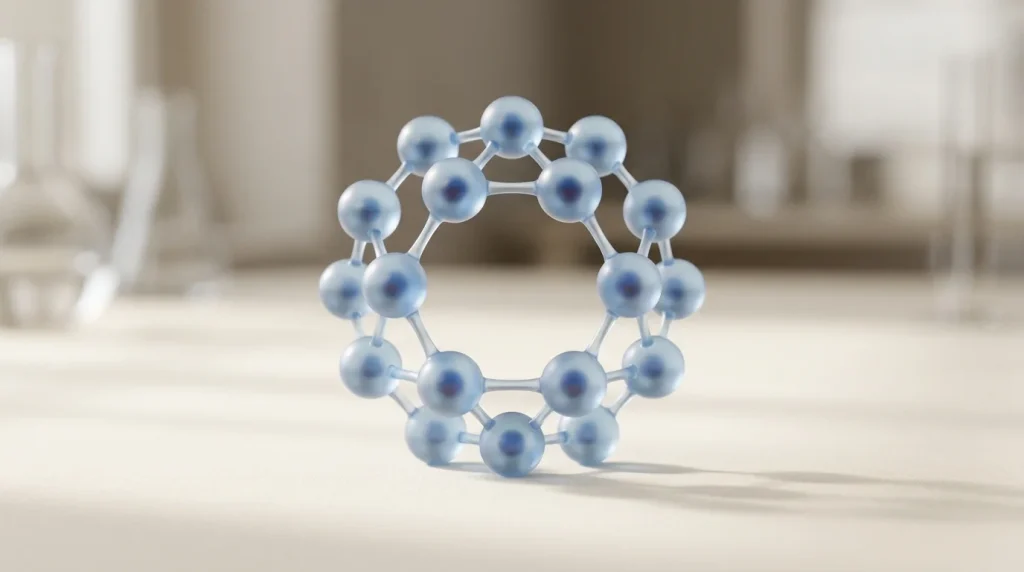
What is PT-141 (Bremelanotide)
The melanocortin system has interested scientists for several decades: it is a network of receptors and signalling pathways through which cells regulate a wide range of processes – from pigmentation to central nervous system signalling. PT-141 (bremelanotide) occupies a special place in this field as one of the more selective synthetic tools for studying this receptor family – primarily the MC4R subtype. In this knowledge-base article we review step by step what this compound is at the molecular level and how it is analysed in cell models. All information is provided for a scientific, in vitro context only.
What is PT-141
PT-141, also called bremelanotide, is a synthetic cyclic heptapeptide – a short chain of seven amino acids joined into a ring. Structurally, it is an analogue of alpha-melanocyte-stimulating hormone (α-MSH) – more precisely, the active metabolite of Melanotan 2 (MT-II). From a research point of view, PT-141 can be regarded as a shortened and stabilised version of MT-II. To understand its precursor better, it is worth reading the separate article on what Melanotan 2 is.
The peptide sequence of the compound is written as Ac-Nle-cyclo[Asp-His-D-Phe-Arg-Trp-Lys]-OH, its molecular formula is C50H68N14O10, and its molecular weight is about 1025 g/mol. PT-141 is usually supplied to laboratories as a lyophilised (freeze-dried) powder for use as a research reagent. If you want to revisit the general basics of what the term “peptide” means, it is worth looking at the introductory text on what peptides are.
Structure and class
A key feature of the PT-141 structure is the lactam bridge between the aspartic acid (Asp) and lysine (Lys) residues. This internal ring locks the peptide backbone into a stable β-turn conformation. It is precisely this geometry that allows the His-D-Phe-Arg-Trp fragment – the so-called pharmacophore – to orient itself precisely towards the receptor. The cyclic structure makes the compound more resistant to enzymatic degradation than linear peptides, so the molecule behaves more consistently and stably in in vitro systems.
Additional stability comes from D-configuration phenylalanine (D-Phe): this “mirror-image” form of the amino acid is harder for proteolytic enzymes to recognise, and at the same time it contributes to precise receptor recognition. This is a common peptide-engineering choice when consistent molecular behaviour in test systems is the goal.
By target, PT-141 belongs to the neuropeptide category – compounds studied by analysing receptor signalling in nerve tissue cell models.
The in vitro mechanism studied
In the scientific literature, PT-141 is described as an agonist of the melanocortin MC3R and MC4R receptors – class A G protein-coupled receptors (GPCRs). In competitive radioligand binding assays carried out with recombinant cell lines in which these receptors are artificially expressed, PT-141 shows nanomolar affinity (Kᵢ values typically around 1–10 nM).
The melanocortin receptor family consists of five subtypes (MC1R–MC5R) distributed across different tissues: MC1R is most often associated with pigmentation research, while MC3R and MC4R are associated with models of central nervous system signalling. It is these latter two subtypes that PT-141 favours in vitro, which makes it a useful tool for researchers trying to separate the contribution of individual receptor subtypes to the overall cellular response.
Once the receptor is activated, the following signal transduction chain is observed in in vitro models:
- Interaction with the Gs protein – the receptor interacts with the stimulatory G protein.
- Activation of adenylate cyclase – the enzyme starts synthesising a second messenger.
- cAMP accumulation – the level of cyclic adenosine monophosphate in the cell rises.
- PKA activation – cAMP-dependent protein kinase A takes part in further signal transduction.
For scientific research, this signalling pathway is convenient because the cAMP response can be measured quantitatively. Both immortalised cell lines and primary neuronal cultures are used as experimental platforms – they make it possible to compare receptor subtype selectivity and concentration–response relationships under controlled laboratory conditions. The early pharmacology of the compound was described by Molinoff and colleagues (Annals of the New York Academy of Sciences, 2003).
Quality and storage in the laboratory
In peptide research, the reproducibility of results depends directly on the purity of the material. Cyclic peptides such as PT-141 may contain synthesis-related impurities, so it is important to check the certificate of analysis before an experiment. How purity is determined in practice is described in the article on HPLC analysis in peptide research.
Proper care of the material in storage is just as important. The lyophilised form is the most stable, but once dissolved the peptide becomes more sensitive to environmental factors. You will find practical tips in the text on storing and reconstituting lyophilised peptides. In general, the following principles are observed:
- Dry, cold and dark – unmixed powder is kept at low temperature, protected from moisture and light.
- The reconstituted solution is short-lived – a prepared peptide solution must be used within a shorter period.
- Avoid repeated cycles – frequent freezing and thawing can break down the molecule.
For the specifications of the specific reagent, see the separate PT-141 (bremelanotide) product page.
Closing note
PT-141 is a valuable research subject above all because of its selective activation of melanocortin receptors – this allows scientists to delve into MC3R/MC4R signalling in cell models. As with the whole family of melanocortin peptides, what matters most here is the biochemistry of the receptor and the signal transduction pathway, not any other applications.
For scientific research only. This article is informational and educational in nature and describes PT-141 (bremelanotide) only as a subject of in vitro / laboratory research. The compound is intended for use only by qualified professionals in a controlled research environment. It is not a medicine, dietary supplement or cosmetic product and is not intended for use in humans or animals, or for diagnosis, treatment or prevention. This text contains no dosing, health or therapeutic recommendations.
Frequently asked questions
Which in vitro mechanisms and models do scientists study using PT-141?
In the literature, PT-141 (bremelanotide) is described as an agonist of the melanocortin MC3R and MC4R receptors (class A GPCRs). In recombinant cell lines in which these receptors are artificially expressed, competitive radioligand binding assays show nanomolar affinity (Ki typically about 1–10 nM). Once the receptor is activated in vitro, a signal transduction chain is observed: interaction with the Gs protein, activation of adenylate cyclase, cAMP accumulation and PKA activation. Immortalised cell lines and primary neuronal cultures are used as platforms, making it possible to compare receptor subtype selectivity under controlled laboratory conditions.
How should PT-141 be stored and handled in the laboratory so that research results are reproducible?
The reproducibility of results depends directly on the purity of the material, so it is important to check the certificate of analysis before an experiment (cyclic peptides may contain synthesis-related impurities). Storage principles: unmixed lyophilised powder is kept dry, cold and in the dark, protected from moisture and light; a reconstituted solution is short-lived and must be used within a shorter period; avoid frequent freeze–thaw cycles, as they can break down the molecule. The lyophilised form is the most stable.
How does PT-141 differ from its precursor Melanotan 2 (MT-II)?
PT-141 is the active metabolite of Melanotan 2 (MT-II) and, from a research point of view, can be regarded as a shortened and stabilised version of MT-II. It is a synthetic cyclic heptapeptide (Ac-Nle-cyclo[Asp-His-D-Phe-Arg-Trp-Lys]-OH), an alpha-MSH analogue. What sets it apart from its precursor is greater selectivity within the melanocortin family, primarily for the MC4R subtype, whereas MC1R is often associated with pigmentation research. Its structure is stabilised by a lactam bridge between Asp and Lys and by D-configuration phenylalanine (D-Phe), which give it resistance to enzymatic degradation.
Are these materials intended for human use?
No. PT-141 (bremelanotide) is intended solely for in vitro / laboratory scientific research by qualified professionals in a controlled environment. It is not a medicine, dietary supplement or cosmetic product and is not intended for use in humans or animals, or for diagnosis, treatment or prevention. No dosing, health or therapeutic recommendations are given.