
Your cart is empty
Start shopping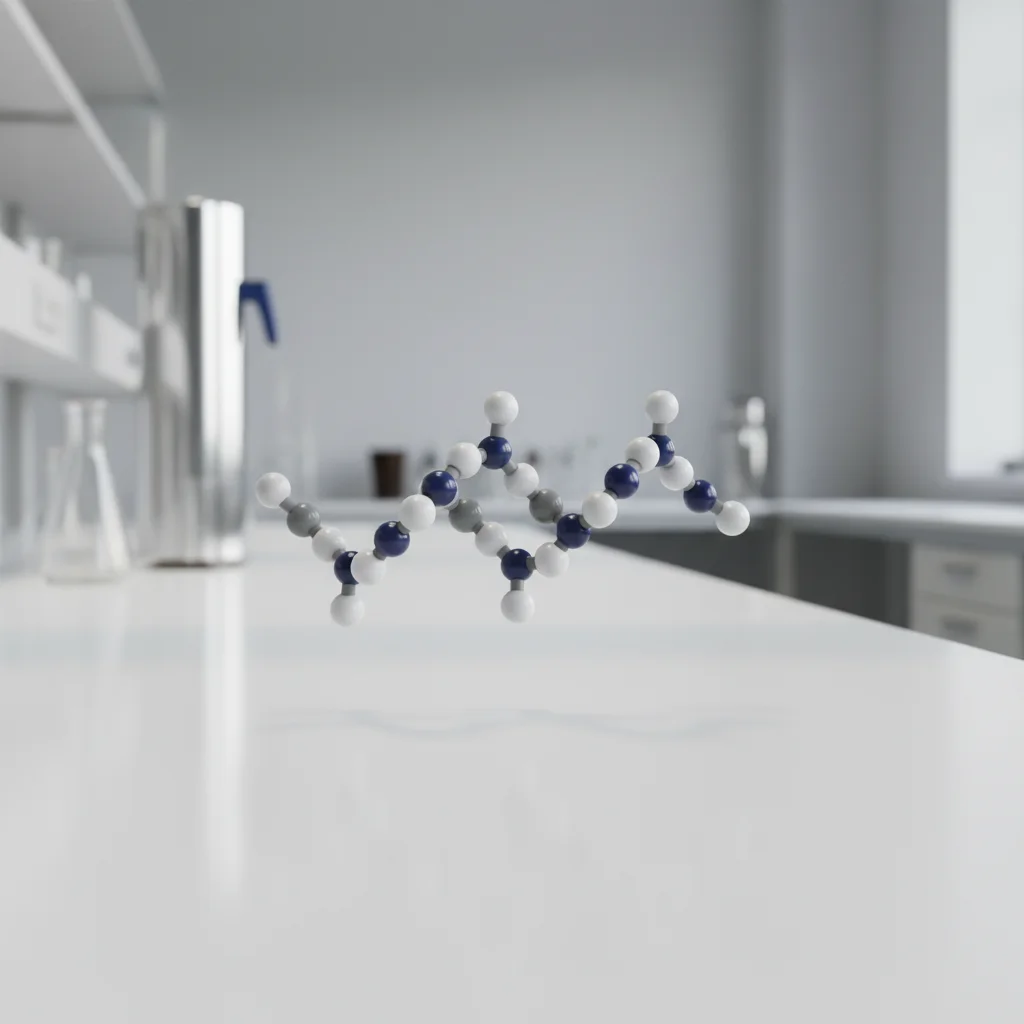
What are peptides and how are they studied in the laboratory
Imagine a string of beads. Each bead has its own shape and colour, and threaded together they form a whole. A peptide looks roughly like that, except that instead of beads it is amino acids that are linked together. In this article we explain in simple terms what peptides are and how scientists study them in the laboratory.
What is a peptide
A peptide is a short chain of amino acids. Amino acids are small building blocks – like the beads on our string. When a few or a dozen or so of them join together, you get a small, orderly molecule – a peptide.
Every peptide has its own order of amino acids, just as a string of beads has its own bead order. It is precisely this order that makes each peptide unique and interesting for scientific research.
How a peptide differs from a protein
The difference is simple – it is size. If a peptide is a short string of beads, a protein is a long, large string made of hundreds or even thousands of amino acids.
- Peptide – usually a few to several dozen amino acids. Short and small.
- Protein – a much longer chain, often also folded into a complex shape.
There is no strict boundary between them, but the general rule is this: the shorter the chain, the more likely it is to be called a peptide.
How scientists study peptides in the laboratory
The research does not take place in a person but in the laboratory – this is called in vitro, which literally means “in glass”. In practice, that means a test tube or a cell culture (living cells grown in a special medium in a dish).
Under these conditions scientists can calmly observe how a peptide behaves and how it interacts with other molecules or cells. Peptides such as BPC-157 or CJC-1295 are common examples studied in laboratories. They are mentioned here only as research subjects that scientists work with in a test tube.
One of the most important steps is checking whether a peptide really is pure and what it should be. For this, HPLC analysis is used – a method that separates a substance into its components and makes it possible to assess its purity.
Why quality and proper storage matter
Peptides are sensitive materials. Even in the laboratory, results are only reliable when the material itself is of good quality and properly handled. Otherwise the research data may be inaccurate.
This is why the following matter:
- Purity – the fewer the impurities, the clearer the research results.
- Storage – many peptides are supplied lyophilised (freeze-dried), so they need to be stored properly and prepared correctly.
We explain in more detail how to store and prepare such materials safely in our article on storage and reconstitution.
In short
A peptide is a short chain of amino acids, smaller than a protein. Scientists study it in the laboratory – in a test tube or a cell culture – not in a person. For research to be reliable, the purity of the material and proper storage are essential. If you would like to see which peptides are used in scientific research, visit our catalogue.
Important: all peptides and materials discussed in this article are intended solely for laboratory and scientific research (in vitro). They are not intended for human or animal consumption, are not medicines or dietary supplements, and may not be used for diagnosis or treatment.
Frequently asked questions
Why does the order of amino acids in a peptide matter?
A peptide is a short chain of amino acids, and every peptide has its own amino acid order, just as a string of beads has its own bead order. It is precisely this order that makes each peptide unique and interesting for scientific research.
Is there an exact point at which a peptide becomes a protein?
There is no strict boundary between them. The general rule is that the shorter the chain, the more likely it is to be called a peptide, whereas a protein is usually a much longer chain of hundreds or even thousands of amino acids, often also folded into a complex shape. A peptide usually consists of a few to several dozen amino acids, so the distinction is based on size rather than a fixed number.
What does it mean in practice that peptides are studied in vitro?
In vitro literally means “in glass”, i.e. the research takes place not in a person but in a test tube or a cell culture – living cells grown in a special medium in a dish. Under these conditions scientists can calmly observe how a peptide interacts with other molecules or cells. Peptides such as BPC-157 or CJC-1295 are mentioned here only as research subjects worked with in a test tube.
How is the purity of a material related to the reliability of research data?
Peptides are sensitive materials, so results are only reliable when the material itself is of good quality and properly handled. The fewer the impurities, the clearer the research results, and purity is assessed with HPLC analysis, which separates a substance into its components. Many peptides are supplied lyophilised, so they need to be stored properly and prepared correctly – otherwise the research data may be inaccurate.